Key Takeaways
- Start with how you live. Plan the floor plan, seating and focal point around your rituals—streaming, reading, entertaining guests, or working from home.
- Think vertical and multifunctional. Use wall space, floating shelves, mirrors and smart furniture like lift-top coffee tables and sofa beds to free up precious floor space.
- Keep it light, layered and personal. A simple colour palette, good lighting, natural materials and pieces you love will make any small living room inviting and timeless.
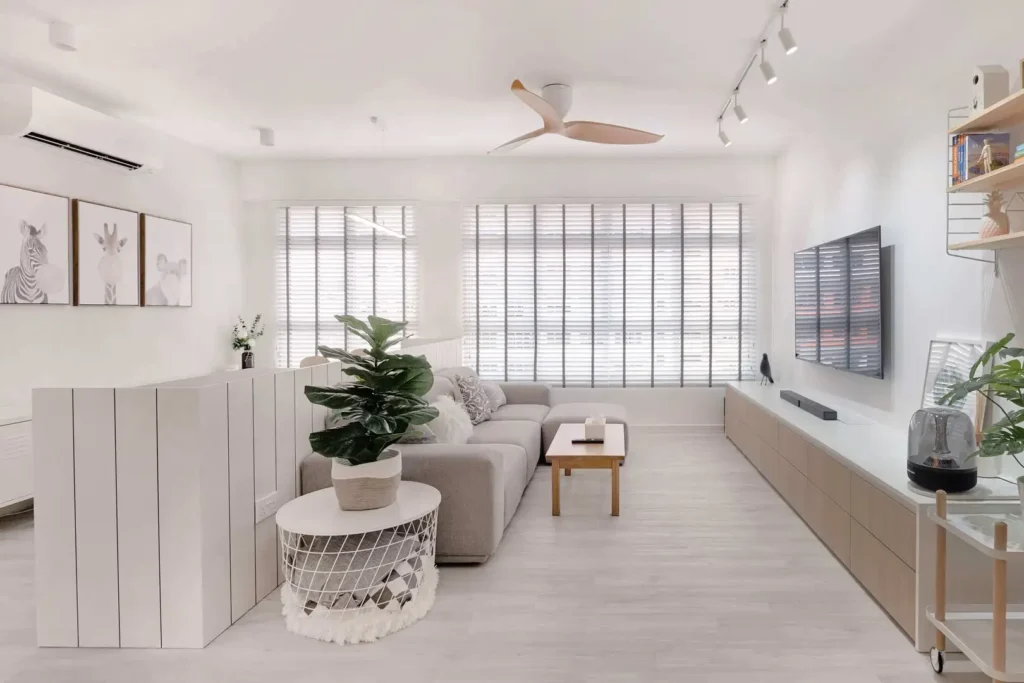
A small living room in a KL condo or terrace house doesn’t have to feel cramped or generic. At Lemonfridge Studio, founded in 2016 by Jeffrey Lee, Renee Lim, and Dester Chua, we believe every room should quietly reflect who you are while working beautifully for daily life.
Whether you’re watching the rain over Mont Kiara, hosting friends for Raya, or just curling up to watch tv, your living room can be your favourite room in the house—no matter its small size.
Rethinking the Small Living Room in Malaysian Homes
Small living, big potential
Small living rooms are common in Malaysian condos, link and superlink houses, and even some semi-detached homes. Developers maximise floor space for bedrooms and balconies, so the main living area often gets the tightest layout.
Instead of seeing this as a limitation, treat your small living room as a great opportunity to curate a dream space that feels tailored and calm rather than cluttered.
From condo to terrace: designing for real Malaysian layouts
In KL’s hot-humid climate, living spaces need airflow, shading and flexible seating for family and friends. Studies on Malaysian terrace houses highlight how window placement and ventilation affect comfort in living areas. ijbes.utm.my+1
Whether you own a compact condo, a narrow terrace house or a larger bungalow, the same principles apply: smart layout, thoughtful furniture and good light will make the room feel larger and more functional. For more on how we handle high-rise homes, you can see our work on high-rise condo interiors.
Start With How You Live, Not Just the Floor Plan
Map your daily rituals
Before buying any furniture, list how you actually use the living room:
- Do you mostly chill with a sofa and a coffee table for snacks?
- Do you need a small dining area tucked into the same room?
- Do kids need floor space to play?
This functional mapping keeps the layout focused instead of filling the room with pieces that fight each other.
Choose a focal point that fits your lifestyle
Every small living room needs a clear focal point—TV wall, picture window, or a cluster of painting and shelves. Placing your sofa and seating around this focal point gives the room a stronger sense of order and makes the room feel calmer.
A wall-mounted TV combined with low cabinets is often the perfect choice in KL condos, freeing table surfaces and keeping clutter to a minimum. For more inspiration, explore our curated KL living room transformations.
Align activities with the right furniture
If you love entertaining guests, a corner sectional with extra seating stools gives everyone a spot without blocking circulation. If you often work from the sofa, a lift-top coffee table that doubles as a laptop desk is a smart double duty piece that suits a small space beautifully. tuengr.com
Light, Colour and Texture: Making a Small Room Feel Larger
Embrace a simple colour palette
Research on space perception shows lighter tones and consistent colour schemes make spaces feel more open, while heavy contrasts can have the opposite effect. ArchDaily
A simple colour palette—think warm whites, gentle greys and a light palette of sage or muted terracotta—lets your eye glide around the room without interruption. Painting walls and ceiling in nearly the same colour helps the room feel taller and more seamless.
Keeping sofa upholstery in the same colour family as the wall can also make the room feel larger, especially in a small living room where far less space is visible.
Layer light for mood and function
Layered lighting isn’t just pretty; studies show that lighting colour and intensity shape how spacious and comfortable an interior feels. MDPI
In a small room, combine:
- Soft ceiling lighting for overall glow
- Adjustable wall lights or hanging pendants to highlight art or a reading nook
- A table lamp or floor lamp beside comfortable armchairs for late-night reading
This mix adds visual interest without overwhelming the space.
Let natural light do the heavy lifting
Maximising natural light instantly makes a small living area feel fresher and more inviting. Keep windows as clear as possible; use light-filtering curtains that can be drawn right up to the ceiling to make the wall feel taller.
Sheer curtains paired with blackout blinds give flexibility for movie nights while protecting floors and furniture from harsh sun, especially in west-facing KL units.
Layout Strategies That Unlock More Space
Float your furniture away from the walls
Pushing every sofa and chair against the wall may seem like a space-saving idea, but it often has the opposite effect—creating a corridor feel. Small living room ideas from current design research recommend floating seating slightly off the wall to improve flow and make the room feel wider. Ideal Home
In narrow spaces, pull the sofa a little forward and use a slim console or open shelving behind it for hidden storage and styling.
Use rugs and partitions to zone the room
A well-sized rug acts as a quiet stage for your seating. A patterned rug under the sofa and coffee table helps define the main zone, while another rug can mark a compact dining area or reading nook.
If you’d like subtle separation between living room and entry, consider timber slats or glass screens. Our team often uses subtle living room partitions that keep light flowing while giving the room a stronger sense of structure.
Read your circulation lines
Look at your floor plan and mark how you walk from door to sofa, from kitchen to balcony. Keep these paths clear; avoid placing a small side table or bar cart right in the middle of these routes.
Good layout is simply the art of keeping movement effortless, so the room feels peaceful even when it’s full of people.
Smart, Multifunctional Furniture for Small Living
Corner sofas, low seating and furniture on legs
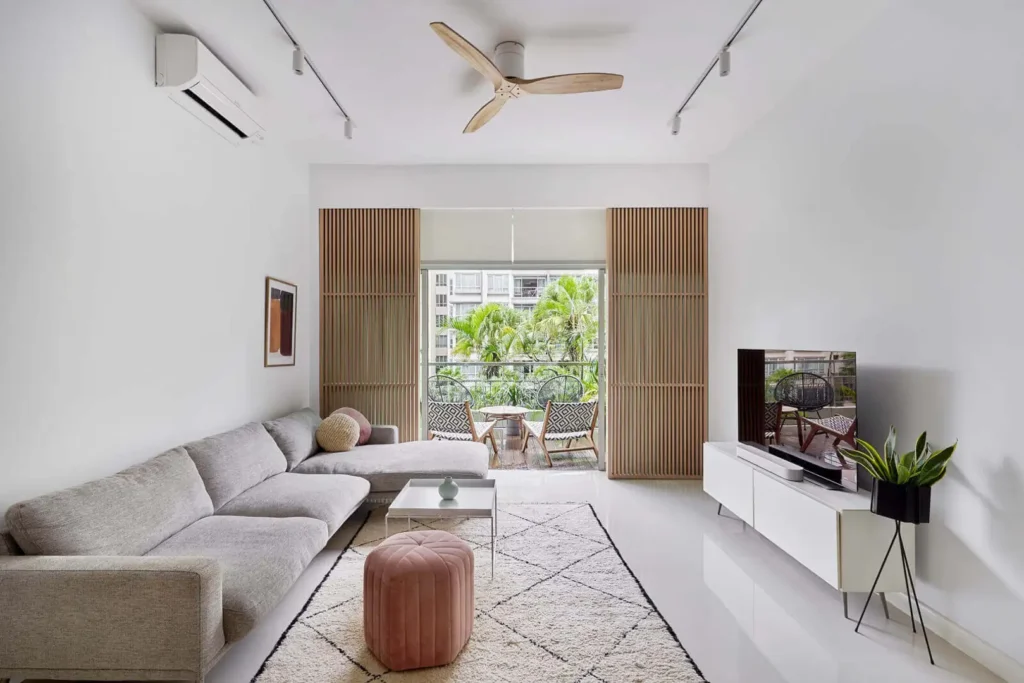
Corner sectionals maximise seating by hugging unused corners while keeping the centre of the room open. When chosen with slim arms and visible legs, a sectional can make the room feel airier and room feel larger.
Low seating—like Japanese-inspired platforms or compact sofas with low backs—makes the ceiling seem higher, another clever way to create more space in a small living room.
Coffee tables, side tables and nesting pieces
In a small living room, every table should earn its keep. Consider:
- Lift-top coffee tables that reveal hidden storage for remotes, chargers and board games, and double as a mini dining table when you want to eat while you watch tv.
- Nesting tables that slide out for guests, then stack away to free floor space.
- Slim side table designs that tuck neatly beside the sofa for drinks or books.
We often pair a compact sofa with a small living room furniture ideas trio: a coffee table, a small side table and a nesting set to keep things flexible without adding clutter.
Storage that quietly disappears
Multifunctional furniture is essential for small living rooms. Studies on small apartments show that storage ottomans, extendable tables and sofa beds significantly improve space efficiency and wellbeing.
Try these smart moves:
- Under-sofa storage drawers for bedding or kids’ toys
- A sofa bed that acts as everyday seating but transforms for overnight friends
- Wall-hung cabinets combined with open shelving to balance storage with display
Lift-top consoles, benches with hidden storage and a slim bar cart that can roll away after entertaining guests all help keep the room functional yet calm.
Vertical Thinking: Walls, Windows and Ceilings
Use wall space wisely
When floor space is tight, your walls become prime real estate. Taller, slim bookshelves and floor-to-ceiling units draw the eye upwards, making the room feel taller without eating into the footprint.
Floating shelves and hanging rails for magazines or vinyls add visual interest while keeping surfaces clear. A mix of closed cabinets and open shelving avoids both visual clutter and a heavy, boxed-in look.
Play with mirrors, painting and art
A well-placed mirror opposite windows or next to a balcony door can bounce light around and give the illusion of more space. Studies on space perception back this up: reflecting surfaces help interiors feel more open and ordered. EnviroBehav Journal
Group your favourite painting, prints and family photos vertically to accentuate ceiling height. Avoid scattering tiny frames across every wall; that creates clutter. Instead, build one strong gallery that tells your story.
For more ideas on art-forward rooms, look at our modern living concepts.
Ceilings, lighting tracks and hanging details
Painting the ceiling in the same colour as the walls or just one tone lighter blurs edges and helps the room feel calmer. Discreet ceiling fans, slim lighting tracks and hanging pendants keep things functional without visual bulk.
We often specify hanging planters or lightweight woven lights to bring in texture without crowding the floor.
Styling a Cosy, Inviting Living Area
Rugs, cushions and layered texture
Texture is everything in a cosy living room. A generously sized rug underpins the seating, softening the floor and grounding the layout.
Layer cushions in a coordinated color palette—linen, cotton, maybe a touch of boucle—to add warmth without chaos. Avoid too many tiny cushions; a few larger ones feel more intentional and comfortable.
Recent advice on rug sizing shows that choosing one large rug that sits under most of the seating, instead of several small ones, makes the space feel bigger and more unified. Better Homes & Gardens
Natural materials and biophilic calm
Malaysian research on biophilic design highlights how natural materials and greenery support wellbeing and reduce stress. GreenTech Malaysia+1
In a small living room, even a single potted plant, a bamboo side table, or a stone-topped coffee table can soften the room feel. Consider reclaimed wood for shelving, rattan chairs, or a jute rug to introduce a subtle, grounded texture.
You can see how we blend natural materials in our Scandi-inspired living rooms and Japandi blends.
Personal details that tell your story
Your living room shouldn’t look like a showroom. Display a curated selection of books, travel finds and ceramics on shelves; rotate them seasonally to keep visual interest without adding clutter.
To keep things cohesive, borrow ideas from minimalist design thinking and Muji-style living spaces: fewer, better objects arranged with intention.
Small Living Room Ideas for Different Malaysian House Types
Compact condos
For KL condos and small apartments, floor space is precious. Prioritise a sectional sofa with visible legs, a lift-top coffee table and vertical storage. Our guide to small condo layouts shows how to weave in a tiny dining area without crowding the living room.
Smart-home features—like app-controlled lighting scenes or motorised curtains—are especially useful here, letting you switch from bright work mode to warm movie mode with a tap.
Terraces, link and superlink houses
In terrace and link houses, the small living room usually flows straight into the dining area and kitchen. Use an oversized rug to anchor the living area and a second rug or change in floor material to define the dining zone.
Tall plants or open shelving used as room dividers keep sightlines open while softly zoning the space. For English-influenced terrace homes, we sometimes draw on our English-influenced terrace homes portfolio to layer wainscoting, soft colours and classic choice armchairs without overcrowding.
Semi-detached homes and bungalows
Even in larger landed property, you might intentionally choose a small living room off the main foyer as a quiet reading nook or formal lounge. Here, comfortable armchairs, a generous side table and a floor lamp can be the right furniture mix, keeping the room intimate yet elegant.
Homeowners seeking a more indulgent look often lean into tailored luxury lounges with plush rug textures, stone-topped coffee tables and curated lighting.
Layered Design Inspirations: From Muji to Wabi-Sabi
Calm, Muji-inspired modernity
If you love clean lines and soft neutrals, exploring our work on Muji-inspired calm can spark ideas. Pair a pale sofa, open shelving and a light palette of woods to keep your small room quietly serene.
Scandinavian, Japandi and wabi-sabi influences
Scandinavian interiors, Japandi blends and wabi-sabi sensibility all celebrate simplicity, craftsmanship and natural light—perfect for small living rooms. Dive into our guides on Scandinavian interior approach, wabi-sabi sensibility and modern–contemporary detailing to see how these styles can evolve in your home.
For a softer, more understated lounge, our projects featuring quiet, minimalist lounges show how to decorate with restraint while keeping the room warm and inviting.
How Lemonfridge’s Interior Designers Bring It All Together
A personalised, research-backed approach
Our interior designers combine technical knowledge—on space perception, lighting and thermal comfort—with a deep understanding of Malaysian living patterns.
From the first conversation, we listen to how you use your living area: movie nights, prayer, kids’ homework, or hosting big open house gatherings. Then we create layout options, moodboards and 3D visuals that reflect your story.
We’re also intentional about sustainable choices, from low-VOC paints to bamboo, reclaimed wood and energy-efficient lighting, helping your house feel good in every sense.
From idea to finished room
Whether we’re reworking a narrow condo lounge or refreshing a landed home, our process typically includes:
- Measuring and redrawing your floor plan
- Exploring layout options for sofa, seating, table and storage
- Selecting colour palette, rug, curtains and light fittings
- Designing custom shelves, partitions and media walls
- Styling with art, cushions and accessories that feel like you
You can see how we personalise each project and how different living room styles—from Muji-inspired lounges to Scandi-infused spaces—come to life in KL homes.
Ready to Design Your Own Small Living Room?
A small living room doesn’t limit your lifestyle. With the right layout, smart multifunctional furniture and a calm, cohesive color palette, it becomes the heart of your house—where you unwind, connect with friends and enjoy daily rituals.
If you’re ready to turn your compact living room into a tailored dream space that truly reflects who you are, our team at Lemonfridge Studio would love to help you create it.
What furniture should I put in a small living room?
Choose a sofa that fits the room (often a compact or corner sectional), a coffee table with storage, one or two slim armchairs or stools for extra seating, and a TV console that’s no deeper than you need. Multifunctional pieces like storage ottomans, nesting tables and wall-mounted shelves keep things lighter while still giving you plenty of surface and storage space.
What color is best for a small living room?
Soft, light colours usually work best for a small living room—think warm white, off-white, pale grey, beige, or gentle blue-greens. These tones reflect more light, reduce harsh contrasts, and help the room feel calm and more open.
What color makes a small room look bigger?
Light, low-contrast colours generally make a small room feel larger, especially soft whites, pale greys, and cool blue-greens that bounce light around the space. Painting the walls, trim and even the ceiling in the same or very similar shades can also remove visual breaks and make the room read as bigger.
How do I arrange a small drawing room or living room?
Start by choosing a focal point (TV wall, window, or feature wall) and angle your seating toward it. Keep walkways clear, follow the 2/3 rule for sofa and rug size, and avoid pushing every piece flat against the walls—slightly “floating” the furniture often makes the room feel better balanced.
How do I decorate my small room?
Keep only what you love and need, choose a light base colour for the walls, and bring in one or two accent colours through textiles or art. Use mirrors, vertical storage, and a few well-chosen accessories instead of many small items, so the room feels tidy and spacious rather than cluttered.
How do I feng shui a small bedroom?
Place the bed in a “commanding position” where you can see the door but are not directly in line with it, use a solid headboard, and avoid heavy clutter or storage under the bed. Choose calm colours, keep electronics to a minimum, be careful with mirrors pointing at the bed, and make sure the room is bright by day and softly lit at night.