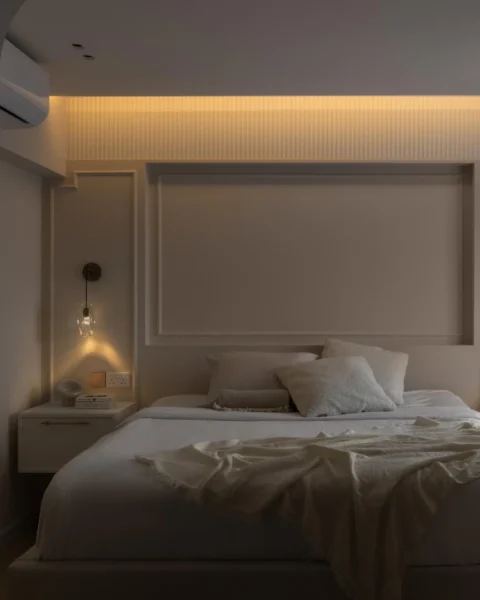
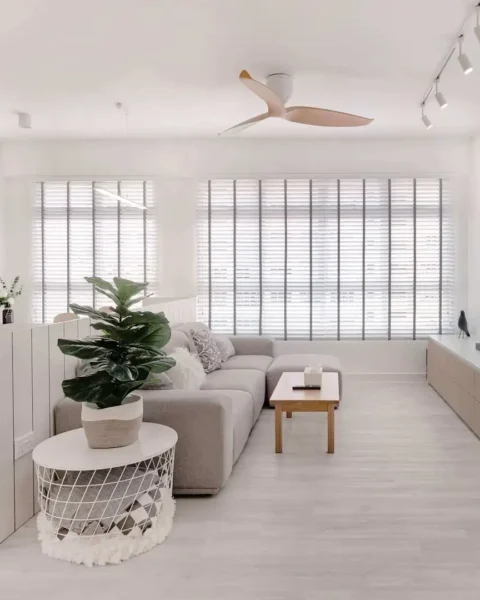
Key takeaways
- Edit first, then design – Japandi works best when you remove excess before adding anything new.
- Prioritise natural light and materials – Soft daylight, timber, rattan, stone and plants instantly move your home toward Japandi serenity.
- Invest in a few quality pieces – Well-crafted furniture and joinery outlast trends and keep your interiors feeling timelessly calm.
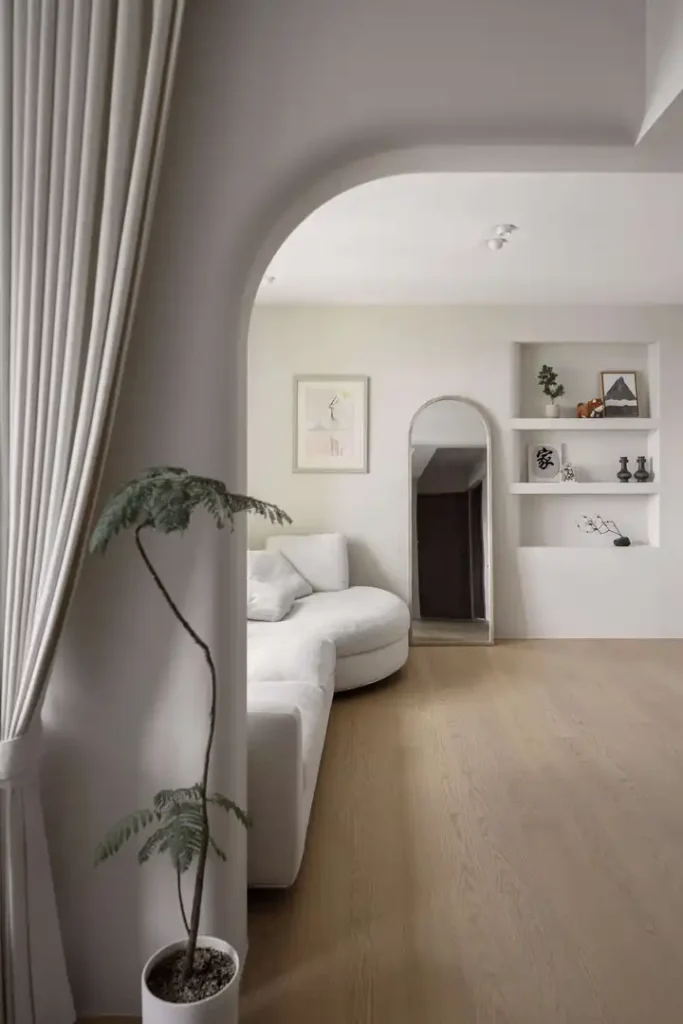
Japandi interiors are more than a passing trend; they’re a way to create warm, minimalist homes that feel calm, personalised, and deeply connected to nature, especially in Malaysia’s busy cities.
Japandi style is a fusion of Japanese and Scandinavian aesthetics, where Japanese interiors bring quiet discipline and Scandinavian interiors add warmth and comfort. Japandi interiors favour simple layouts, low-slung furniture, and an understated aesthetic that feels calm rather than cold.
At its heart, Japandi style combines clean lines, a neutral palette, and natural materials to create spaces that feel airy but still lived-in. You’ll see soft edges, minimalist decor, and a new aesthetic that celebrates wabi sabi imperfection as much as carefully crafted simplicity.
A brief history of Japandi interiors
The history of Japandi interior design is often traced back to the late 19th century, when Japan opened its borders and Scandinavian designers began travelling there, inspired by Japanese design and craftsmanship. Over time, they brought ideas home, and the shared love of minimalism and nature quietly evolved into today’s Japandi interiors.
Both traditions value simplicity and everyday beauty: the Japanese idea of wabi sabi and the Scandinavian concept of hygge. Together they form a design style that feels rustic yet sleek, and that has become a global trend for people seeking calmer homes and more mindful lifestyles.
Why Japandi suits Malaysian living
In Kuala Lumpur, many of us live in compact condos or multi-generational landed homes where every room and every square metre of space matters. Japandi interior design suits this perfectly: it favours open layouts, minimal partitions, and practical storage so your house feels larger, brighter, and more breathable in our tropical country.
The Japandi style has gained popularity with Malaysians who want a slower lifestyle, less visual noise, and interiors that express a sense of serenity rather than status. Japanese design helps you let go of clutter, while Scandinavian influences keep things warm, family-friendly, and easy to maintain day to day.
Research on biophilic and home-focused design shows that bringing nature indoors—through plants, views, and natural light—can support wellbeing, making Japandi’s love for greenery and daylight especially relevant for urban homes.
Core principles of Japandi interior design
Japandi interiors are guided by a few key principles: craftsmanship, texture, balance, and serenity, with a strong emphasis on natural materials and thoughtful lighting.
Minimalism and calm negative space
Japandi minimalism is not about empty rooms; it’s about intentional space. You keep what matters, hide the rest, and allow negative space to give every room a calm, almost meditative feeling. This “less is more” approach is especially helpful in compact KL condos, where minimalism can transform a tight living room into a serene retreat.
Our job as designers is to edit. We plan storage, soften lighting, and use clean lines so your interiors feel composed rather than bare, creating a sense of tranquility from the moment you step inside. For a deeper dive into how we handle pared-back spaces, you can see how we apply minimalist design principles across different Malaysian homes.
Nature, natural light and biophilia
Japandi style celebrates nature, so we maximise natural light and blur the boundary between indoors and outdoors. Sheer curtains, low-profile furniture, and uncluttered window walls help light wash across the floor, while plants and indoor trees bring biophilic elements into the home.
Studies on biophilic interiors show that indoor greenery, daylight and organic materials can improve mood and perceived comfort—exactly the calm many homeowners seek after a long day in the city.
Craftsmanship, texture and quality
Japandi interiors value craftsmanship and long-lasting quality over quick fixes. You’ll often see joinery in solid wood, bamboo or rattan, cool stone countertops, and upholstery with rich texture that still feels soft and inviting.
This quiet elegance—the kind you might see in Architectural Digest—comes from carefully combining Japanese design details with Scandinavian homes’ love for tactile comfort and slightly rustic finishes. It’s a timeless way to decorate that feels both elevated and approachable. If you’d like to compare, our Scandi-inspired projects for Malaysian homes show how we translate similar ideas through a purely Scandinavian lens.
Planning your Japandi mood board
Before you buy anything, we recommend starting with a mood board. Collect images of Japandi interiors: soft whites, light beige, oak floors, slim black lines, and greenery. A cohesive neutral palette of whites, creams, greys and taupes creates an understated base that lets your furniture and art stand out while still feeling calm.
From there, map each room: how you move through the space, where natural light falls, and where hidden storage can tuck clutter away. Simple designs such as low consoles, slim benches and floating shelves keep the layout sleek while leaving plenty of negative space.
Japandi living room ideas for Malaysian condos
In a condo living room, Japandi interiors are all about attractive minimalism with cozy accents. We often start by opening up the space, using a curved sofa, a soft rug, and a single feature wall in light wood to ground the living area. To see how we plan compact layouts, you can explore our approach to condo interiors in KL.
Japandi style encourages multifunctional furniture: a coffee table with storage, nesting side tables, and media units that conceal devices. You’ll find suitable Japandi furniture at IKEA with minimalist pieces in neutral tones and natural materials, while local retailers like KARE and Commune offer designs with clear Scandinavian influences and warm timber detail. Online platforms such as Shopee and Lazada carry budget-friendly Japandi-style decor, making the look accessible even for DIY updates.
For smaller footprints, especially when you’re working with a tight floor plan, our insights on small condo makeovers in Malaysia show how storage, zoning and multifunctional pieces can help Japandi interior design truly transform an everyday living space into something that feels ordered, calm and deeply personal.
Japandi bedrooms for restorative sleep
A Japandi bedroom is designed as a retreat. Think low-profile beds, breathable cotton or linen, and warm timber floors. For clients who love Muji, we often draw on our experience with calm, Muji-inspired rooms to keep the palette gentle while still distinctively Japandi.
Soft, layered lighting is key: warm bedside lamps, dimmable ceiling lights, and perhaps smart-home controls that let you set evening scenes with a single tap. Natural materials such as wood, bamboo and cotton add warmth, while touches of stone or ceramic keep the look grounded.
We keep accessories minimal: a single artwork, a simple ceramic vase, maybe a rattan basket for throws. Japandi bedrooms promote a restful, natural look and feeling—perfect if you want to wake up with more clarity and go to bed with less visual noise.
Natural materials, colour and texture
Japandi interiors lean heavily on natural materials: pale wood, stone, bamboo and rattan. Pair these with handmade ceramics and woven textiles and you immediately create a sense of calm, tactility and everyday beauty in the house.
Colour-wise, Japandi favours a neutral palette with soft beige, sand, and off-white, balanced by small hits of charcoal or black. Research on colour in luxury interiors links these subtle tones with sophistication and “quiet luxury”, making them ideal for owners who want spaces that feel premium without shouting.
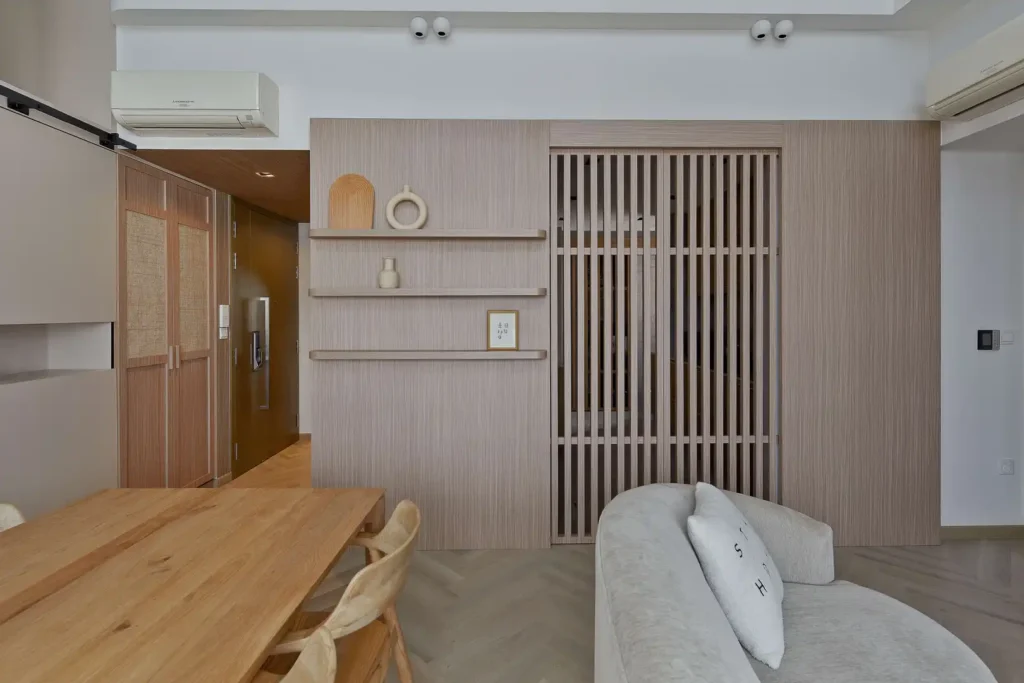
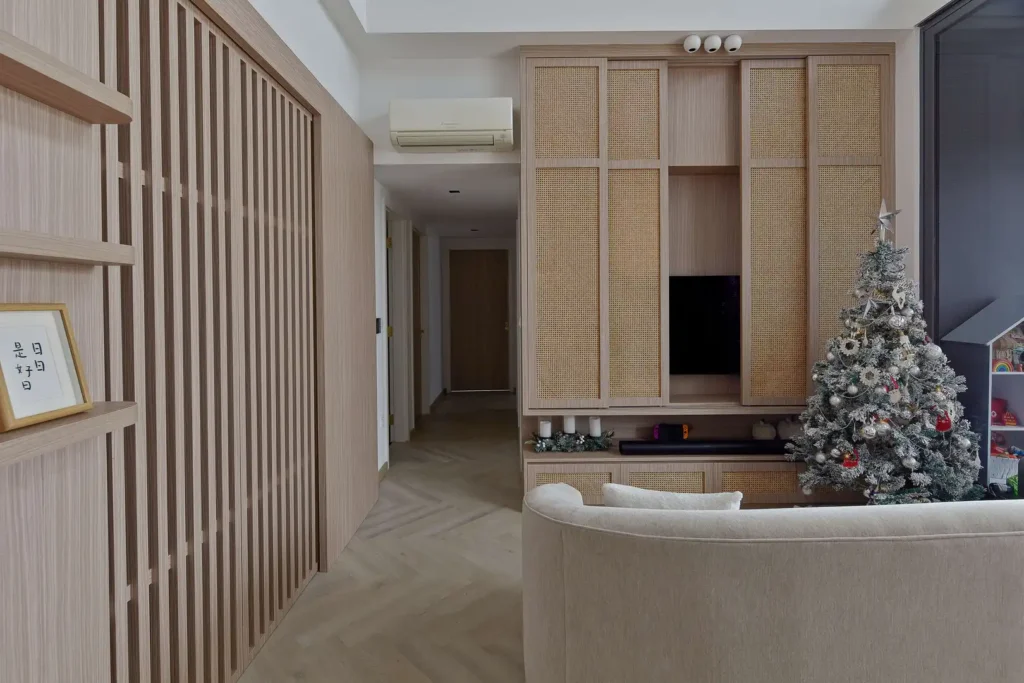
To avoid flatness, we layer texture: slatted panelling, boucle or linen upholstery, and woven rattan panels like the TV feature wall in the image above. This mix of soft and rough elements, combined with carefully planned lighting, keeps the interiors warm and inviting rather than stark. If you’re drawn to natural imperfection, our guide to wabi-sabi-inspired interiors shows how patina and age can sit beautifully alongside Japandi calm.
Furniture, accessories and styling for every room
Because Japandi style is rooted in functionality, every piece of furniture has a job to do. We favour slim-profile sofas, simple timber dining sets, and benches that double as storage. Intentional decor—a teapot on a tray, a small branch in a vase—keeps surfaces calm but still personal.
The market in Klang Valley and Penang now includes specialty studios offering Japandi-inspired dining sets and low platform beds, so Japandi furniture can be found locally without expensive imports. When we style accessories, we add just enough: a couple of rattan baskets, stoneware candleholders, and perhaps one sculptural object to introduce a sleek focal point.
Across different rooms, we decorate with restraint, repeating materials and colours so the whole home feels like a single, flowing living space. This makes it easy to explore seasonal tweaks—like swapping cushions or throws—without disrupting the overall aesthetic.
DIY Japandi projects vs hiring an interior designer
There’s plenty you can do as DIY: declutter ruthlessly, repaint walls in soft neutrals, swap harsh lights for warm, dimmable lamps, and introduce a few well-chosen plants. Even rearranging existing furniture to open up circulation can transform the feeling of a room.
When layouts become complex—think odd-shaped condos, multi-level terraces, or full bungalow renovations—it helps to bring in an interior designer who understands Japandi principles. For more complex landed projects, you can see how we approach bungalow transformations in Malaysia to balance structure, joinery and lifestyle. We coordinate joinery details, lighting plans, and built-in storage, drawing on experience in Scandinavian interior-inspired projects, minimalist homes, and detailed space planning for Malaysian regulations.
How Lemonfridge reinterprets Japandi for KL homes
At Lemonfridge Studio, we see Japandi as a flexible design style, not a rigid template. Our interior design work balances fresh optimism with calmly luxurious spaces, always tailored to how you live, not just how a Pinterest board looks.
For high-rise condos, we often pair Japandi interiors with smart, space-efficient planning similar to our other condo transformations, while landed properties like semi-detached and linked homes benefit from more expansive timber and stone elements. In bungalows, Japandi becomes an elegant backdrop for larger families and multi-generational living, with thoughtful circulation and shared spaces that encourage connection.
Throughout, we draw from wabi-sabi thinking and minimalist design principles, integrating sustainable materials such as bamboo and reclaimed wood, and specifying durable finishes that stand up to Malaysia’s humidity. The result is a timeless yet current look—rooted in Japan and Scandinavia but tuned for our tropical context.
Start your Japandi journey with Lemonfridge
If you’re ready to transform your space, start small: declutter one room, introduce a few natural materials, and adjust your lighting. Notice how the feeling shifts when your interiors are calmer and more intentional.
When you’re ready for a holistic redesign—whether it’s a compact condo or a spacious landed house—reach out to Lemonfridge Studio to create a Japandi-inspired home that quietly reflects who you are and how you want to live.
FAQ
What exactly is Japandi interior design?
Japandi interior design is a hybrid style that blends Japanese minimalism with Scandinavian simplicity and warmth. It focuses on uncluttered spaces, clean lines, natural materials like wood and stone, and a soft, neutral colour palette to create calm, functional homes.
Is Japandi still in style in 2026?
Yes. Recent trend reports still list Japandi as a continuing influence, describing it as a timeless, calming look rather than a short-lived fad. Designers expect its focus on natural materials, sustainability and serene minimalism to keep it relevant beyond 2026, even as homes become more personal and layered.
Who invented the Japandi style?
No single person “invented” Japandi. The aesthetic grew out of a long history of mutual influence between Japanese and Scandinavian design, dating back to Scandinavian visits to Japan in the 19th century. The actual word Japandi—a blend of “Japan” and “Scandi”—only became popular in the mid-2010s to describe this fusion style.
What is the meaning of Japandi?
“Japandi” is a portmanteau of Japan and Scandi, referring to the blend of Japanese and Scandinavian design. It describes interiors that combine Japanese minimalism and wabi-sabi with Scandinavian comfort, lightness and hygge.
Is Japandi the same as wabi-sabi?
No. Japandi is an interior style that mixes Japanese and Scandinavian design, while wabi-sabi is a Japanese philosophy about finding beauty in imperfection, impermanence and simplicity. Japandi often borrows wabi-sabi ideas—such as appreciating patina and natural materials—but also adds Scandinavian warmth and functionality.
What color walls for Japandi?
Japandi walls usually stay soft and neutral: warm white, off-white, light beige, greige or very pale taupe. These hues make rooms feel airy and calm, while letting natural textures, timber and greenery stand out. You can add depth with a slightly darker accent wall in muted clay, stone or charcoal, as long as the overall palette stays gentle and understated.